Wit's suicide despair
The Sorrows of Young WertherWerther’s suicidal despair is a recurring state that hardens into a carefully considered decision to end his life. The novel traces it through diary-like entries, conversations, and a final letter: despair first appears as a force that overwhelms judgment, then becomes a fixed purpose that Werther interprets as a sacrifice for Charlotte. His account also exposes the danger of treating a person’s threats as mere rhetoric, while showing how his own interpretation of events narrows toward a single, fatal conclusion.
A theory of overwhelming passion
In conversation with Albert, Werther argues that violent passion can destroy a person’s capacity for calm reflection, making advice from someone more composed powerless to restore it. To defend this comparison, he recounts the history of a young woman whose life had once centered on modest household routines and village pleasures. After placing her hopes in a young man who repeatedly encouraged them, she was abandoned; Werther describes her subsequent despair as a condition in which she could no longer see any prospect beyond the loss. He presents her death as evidence that emotional suffering may exceed the sufferer’s ability to endure it, rather than as a folly that patience alone could have prevented.
Albert objects that Werther’s example concerns an ignorant girl and does not establish that a more experienced person would be similarly overcome. Werther replies that reason has little power when passion rages within a person confined by human limits. Their disagreement remains unresolved, and they part without either persuading the other. The exchange establishes the framework through which Werther understands his own state: he resists the idea that a detached observer’s judgment can measure what an overwhelmed person is capable of bearing.
Loss of pleasure and inward blame
By November 3, the wish for death has become part of Werther’s daily consciousness. He describes going to bed hoping not to wake and feeling miserable when morning comes. Rather than attributing his distress to the weather, an acquaintance, or a single disappointment, he identifies himself as the source of his sorrow, contrasting this with the former self whose heart had seemed to open a paradise at every step.
The change is registered in his response to nature. Looking toward distant hills at sunrise, he sees the landscape and stream, but their beauty can no longer draw tears of joy from him. He longs for the tears that once relieved him and prays for them as a laborer in a dry climate might pray for rain. The contrast is not simply between a beautiful landscape and a sad observer: the natural world remains abundant, while Werther experiences himself as unable to receive its gifts. He recalls that earlier happiness came when he waited patiently and accepted what he received with gratitude; that memory now intensifies his awareness of how far he has fallen from that state.
Threat, tenderness, and deliberation
Werther’s despair is not hidden from those around him. He has repeatedly discussed his wish to leave the world with Albert, and the subject has also arisen between Albert and Charlotte. Because Albert opposes suicide and doubts that Werther’s threats are serious, he sometimes ridicules them; Charlotte consequently becomes less alarmed, though she has private apprehensions she does not share with her husband. This disbelief helps explain how a long-visible danger can still take the household by surprise.
Small signs of tenderness acquire disproportionate force in Werther’s reading of Charlotte. After she calls him dear Werther at parting, he repeats the words to himself and laughs at his own response, even as the episode shows how intensely he attends to her smallest gestures. On November 21, he imagines that her kindness, attentive listening, and pity are a poison that will destroy them both. His interpretation does not establish that Charlotte intends such an effect; rather, it reveals how hope and foreboding coexist in his perception of her.
After Charlotte’s return, the thought of death takes fixed possession of Werther, but he insists that he will not act precipitately. He resolves to proceed with deliberation and calmness. In the letter he writes on December 21, he describes the previous day’s separation from Charlotte as leaving him in tumult, then recounts how tears and competing schemes gave way to one settled decision. He frames death as the limit of his suffering and declares that one of the three people bound together by the situation must die, choosing himself. He also admits that rage had brought thoughts of killing Charlotte and Albert as well as himself. The letter therefore reveals both the deliberateness of his chosen course and the violence of the alternatives he says he has rejected.
The pistols and the meaning of sacrifice
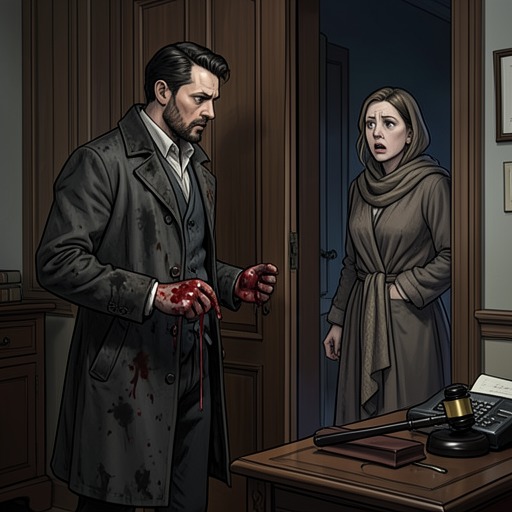
When Werther’s servant brings the pistols, Werther is elated to learn that Charlotte handed them over herself. He treats the gesture as a sign that Heaven favors his design and that Charlotte has supplied the means of his death. Yet Charlotte’s distress at being asked to deliver them, and her fearful forebodings afterward, show how differently the same act is experienced by its participants. Werther reads her trembling as intimacy with his purpose; the surrounding narration presents it as alarm.
In his final writing, Werther casts his death in the language of devotion and sacrifice, wishing that it could restore peace and joy to Charlotte. He also makes practical requests concerning his burial: he asks to lie beneath two lime trees at the corner of the churchyard facing the fields, and wishes to be buried in the clothes he is wearing. These details give his imagined ending a precise place and material form, while his language turns an act rooted in private despair into a supposed gift to the woman he loves. The distance between that self-interpretation and Charlotte’s fear is central to the tragedy: his resolve appears to him as completed devotion, but it depends on reading her actions and feelings through the closed circuit of his own anguish.